There’s a thought behind this machine- and it’s certainly behind it because the thought came some time after work on the machine was started. It concerns knowledge. You can have a thought and it may stay with you or it may evaporate in a second. If you have a thought and you decide to give it some substance by making a machine out of it, you’re stuck with it for at least as long as it takes to build the machine. During that time, the thought develops and usually doubt creeps in; was the thought worth the time and effort?
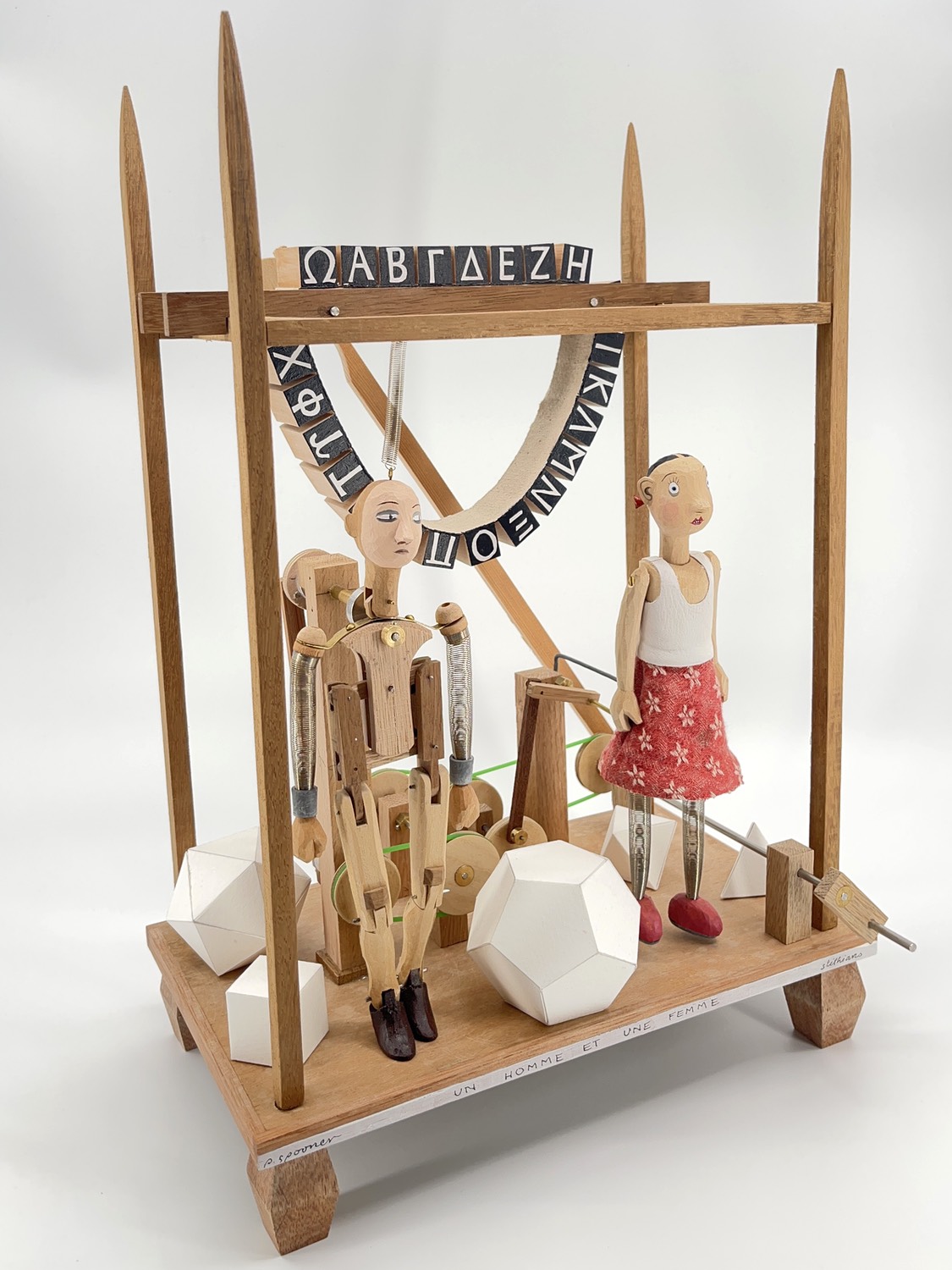
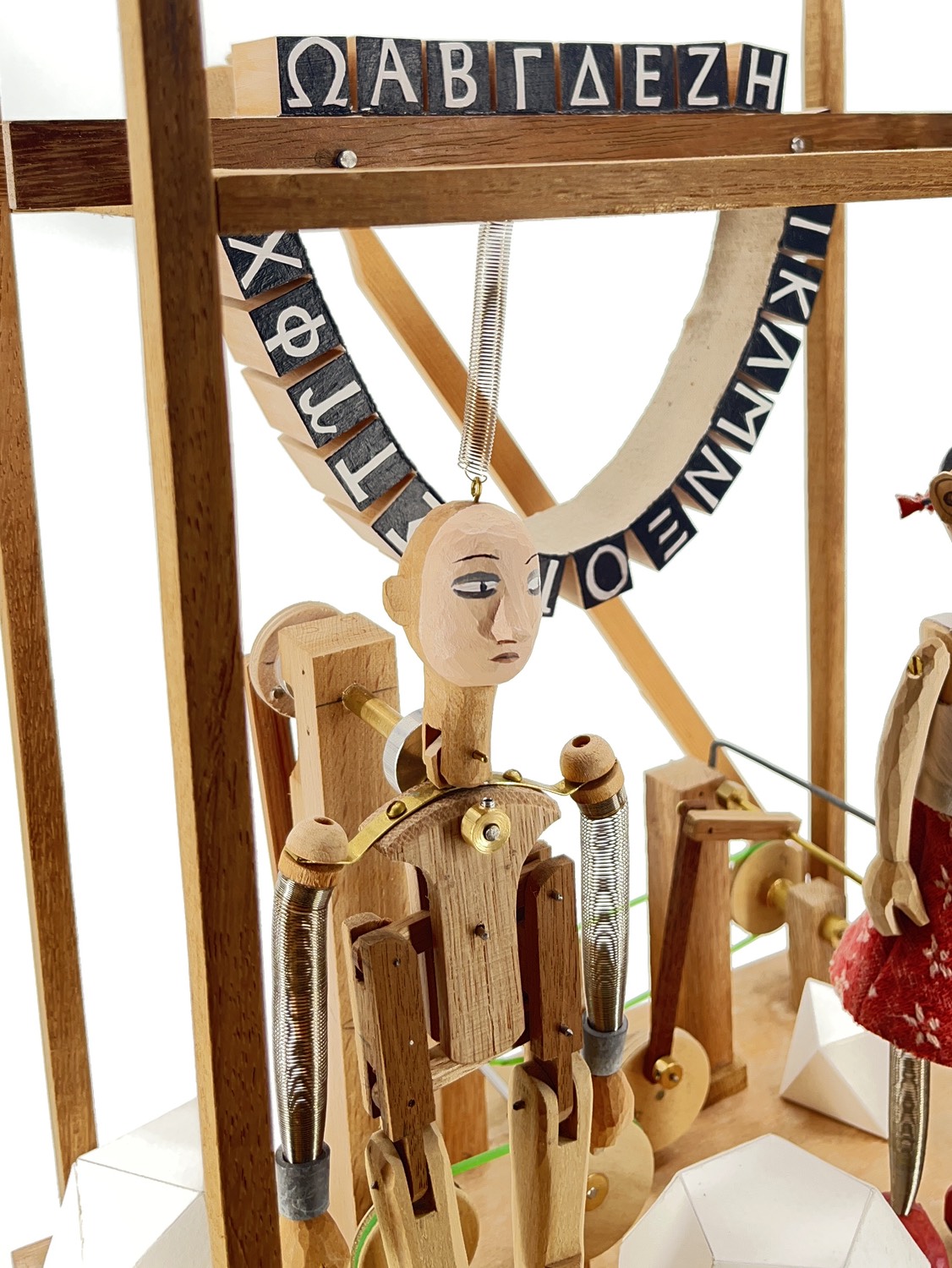
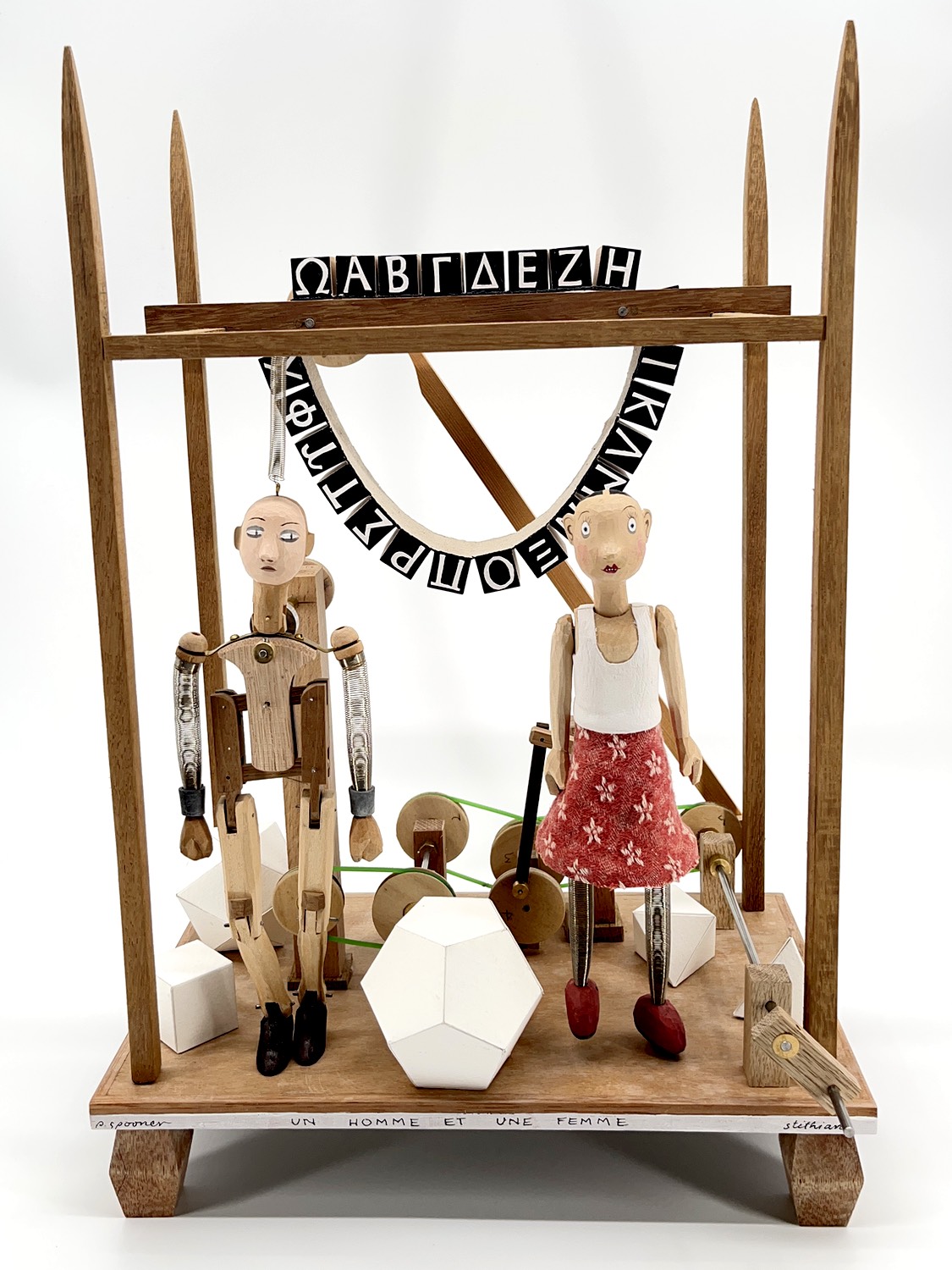
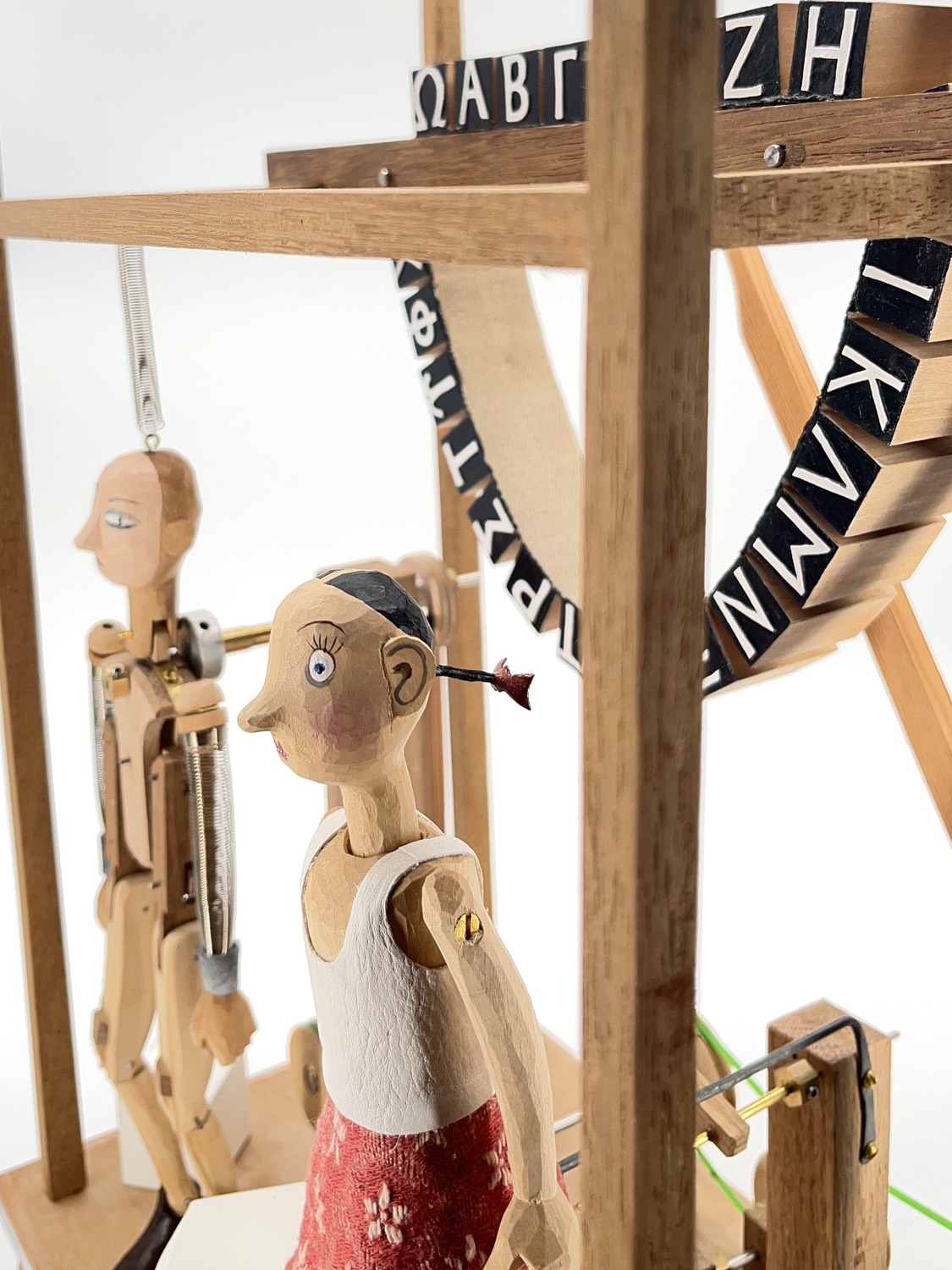
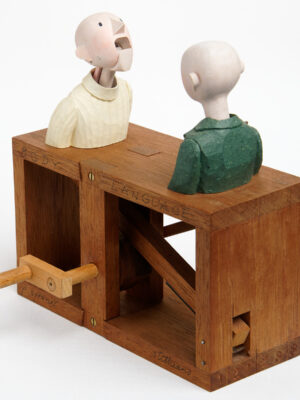
I put together two figures left over from an abandoned project and linked them with belts and pulleys so that they waggled about. One was a woman who danced in the Irish fashion, the other was a male robot whose dancing was less confident, more like a chap who didn’t know or like anything about dancing. I called it ‘A Man and a Woman’. Then I translated them into French. That wasn’t enough. Either I could scrap it and use the figures for something else or plough on and hope for a happy outcome. I’d already made a piece called ‘The Science Museum’ which was an assembly of spare parts of other abandoned projects inside a wooden frame. The suggestion was that, as in a proper museum, there was the prospect of an infinitely expanding store of knowledge. I thought I’d carry on with a display of informative or interesting objects in a frame as if it was the beginning of a compendium of all wisdom. Being able to distinguish between one man and one woman is a modest start but there is plenty of scope for expansion as the project moves forward. Eventually we could show every variation of the two genders and of everyone in between. Leaving that for the future I embarked on a study of the development of language and built a mechanism that would help people memorise the Greek alphabet with a view to examining the development of all language, human, animal and machine. Staying with the Greeks, I then picked out the thinking of Plato who described the only five possible perfect solids, represented here by paper models, not at all solid, but having the required characteristics of being made up of congruent regular polyhedra with the same number of faces meeting at each vertex.